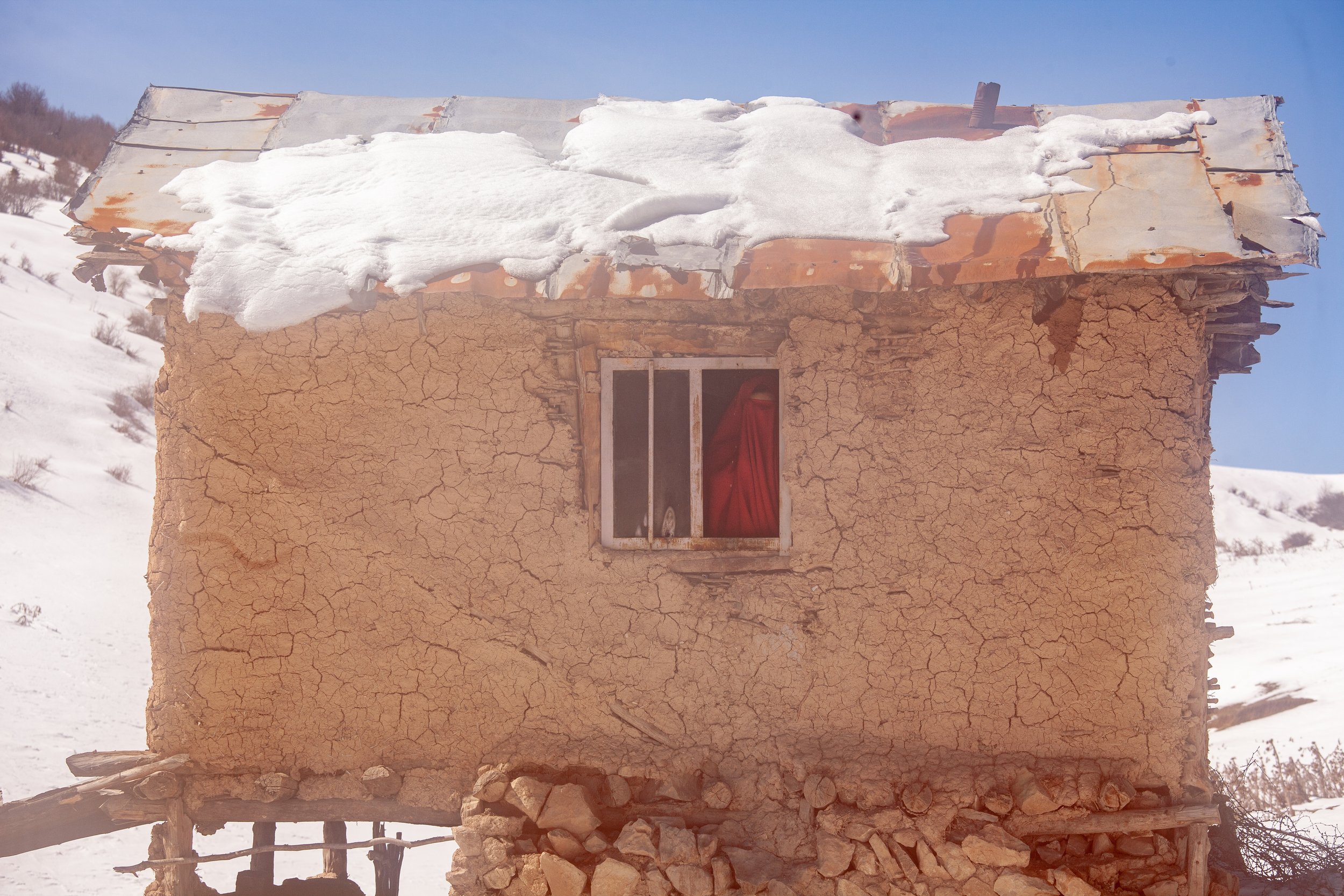
VIII / Azadi Souvenirs / 2018

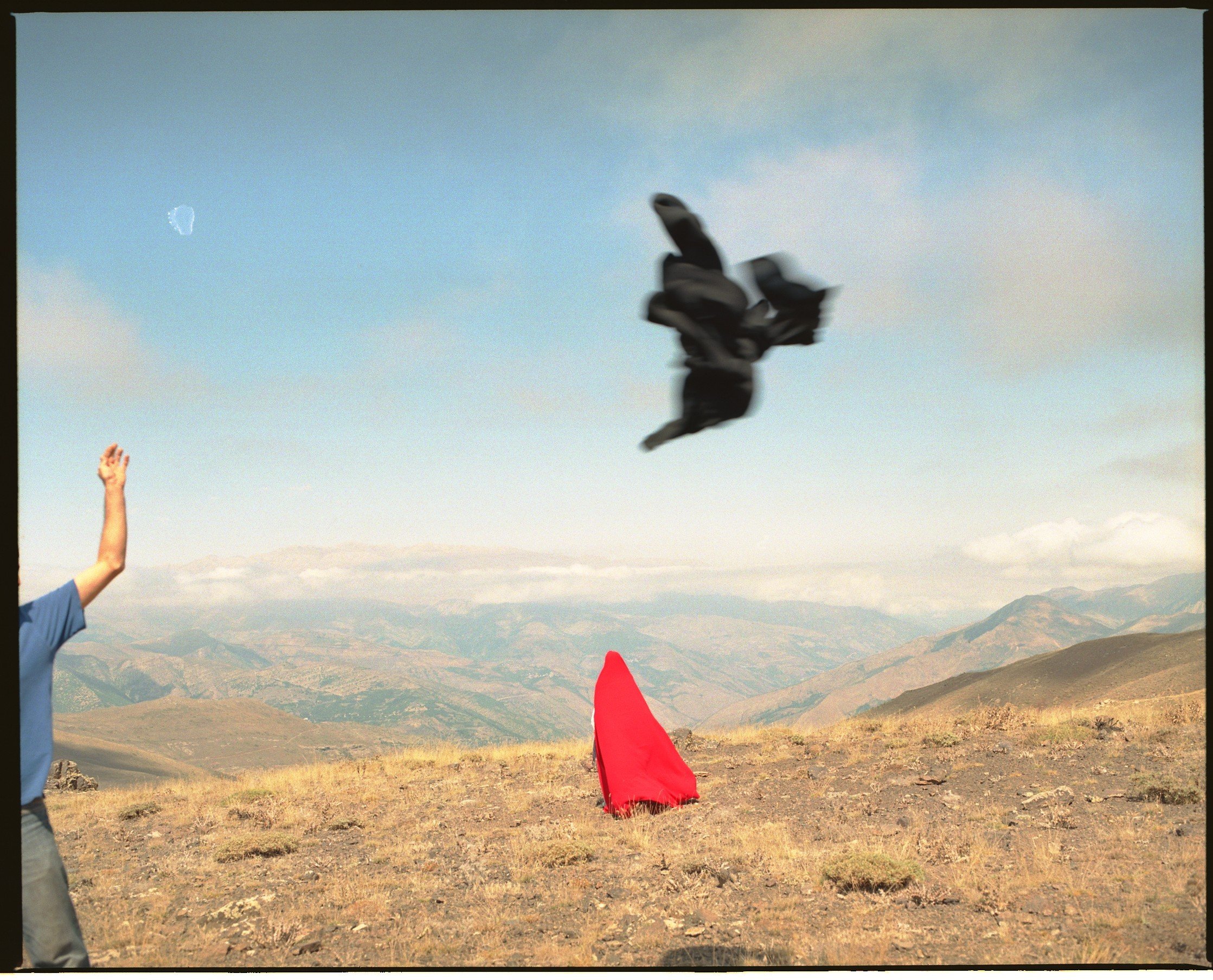
A person throwing a black jacket or piece of clothing into the air in an open landscape with mountains in the background, a red object on the ground, and a bird flying in the sky.
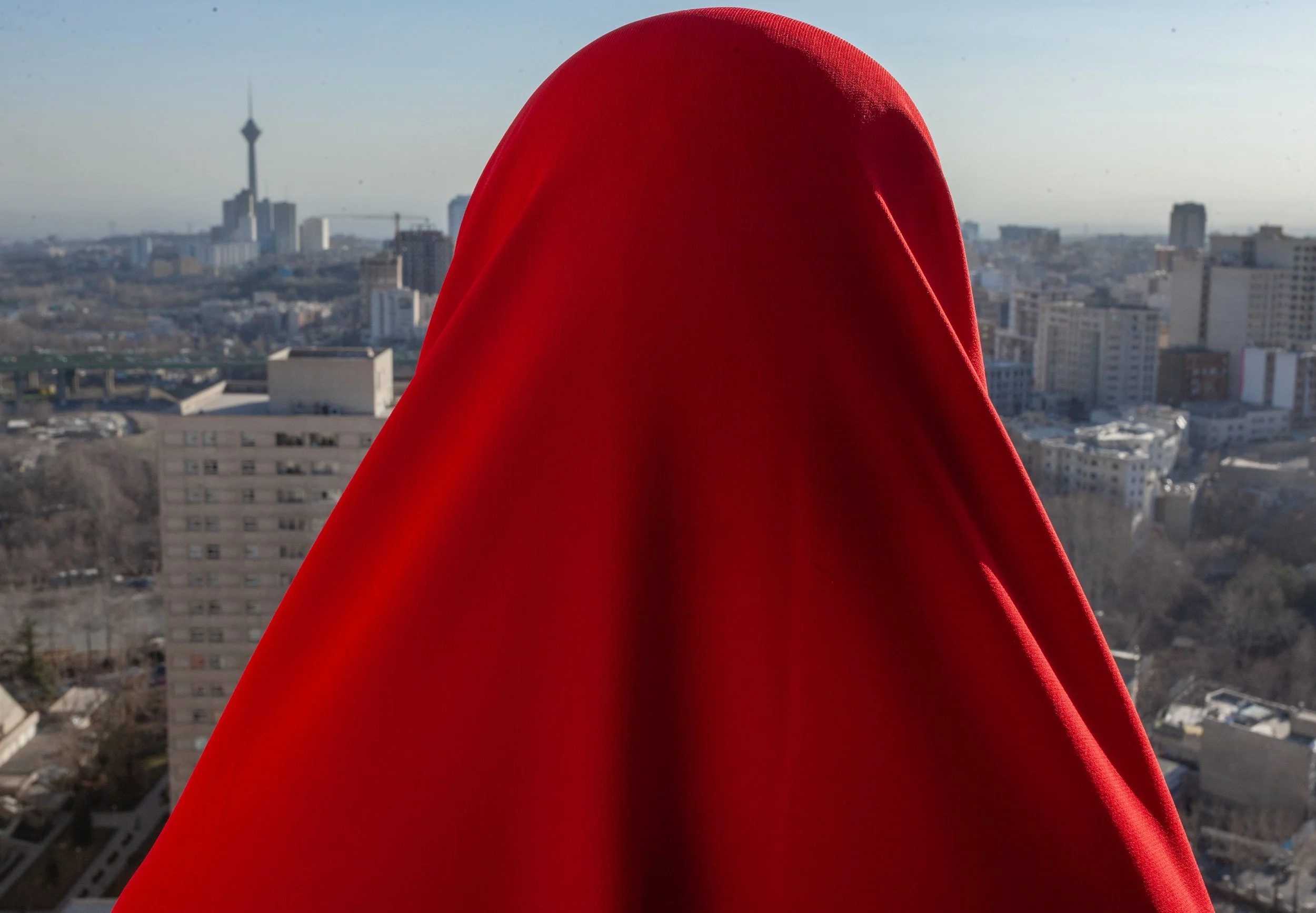
A person wearing a red hooded garment standing on a balcony overlooking a cityscape with tall buildings and a tower in the distance
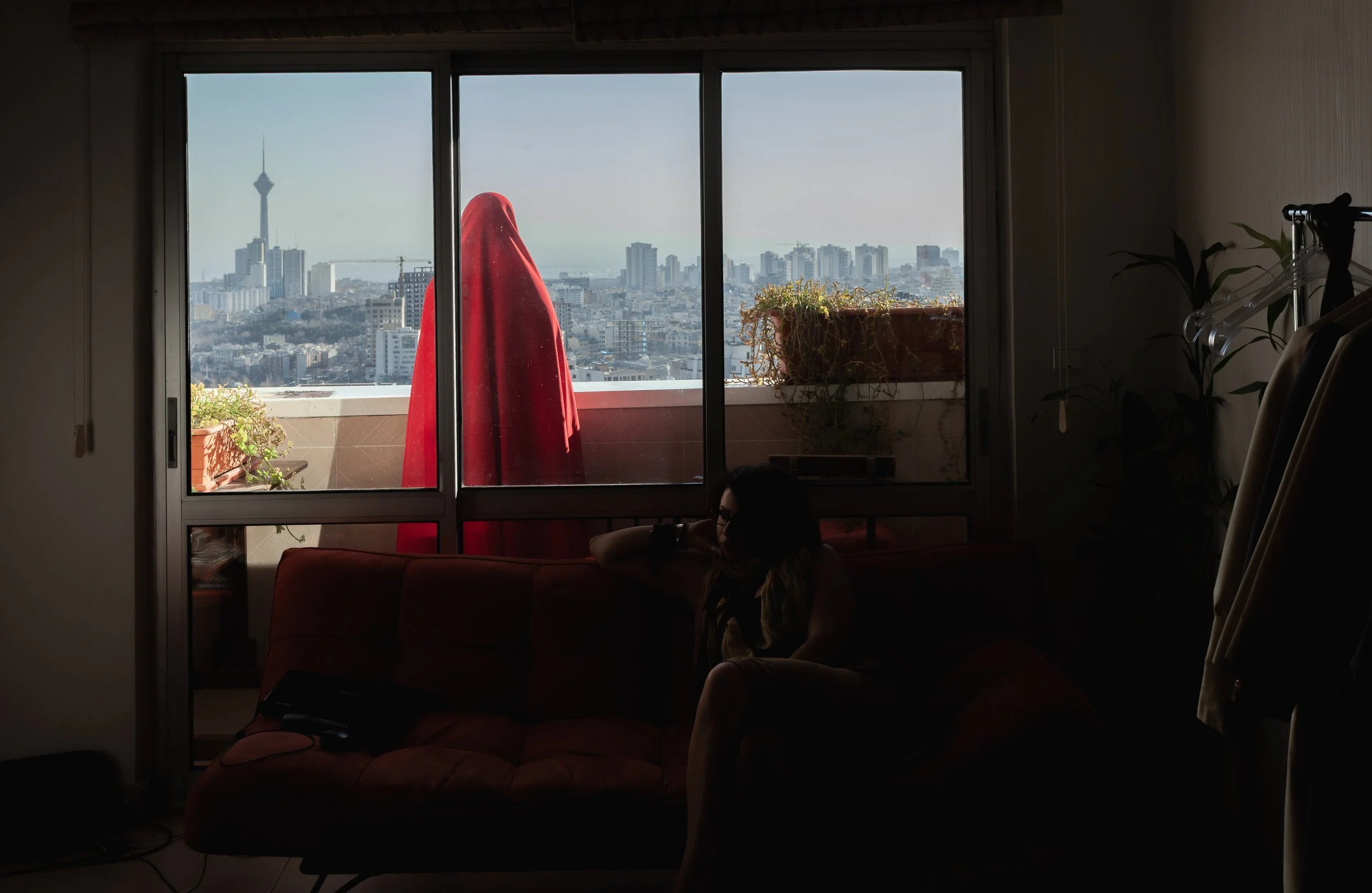
A woman sitting on a couch inside a dimly lit room, looking towards a large window with a cityscape view, including a tall tower in the distance. The outside balcony has a red curtain and potted plants.
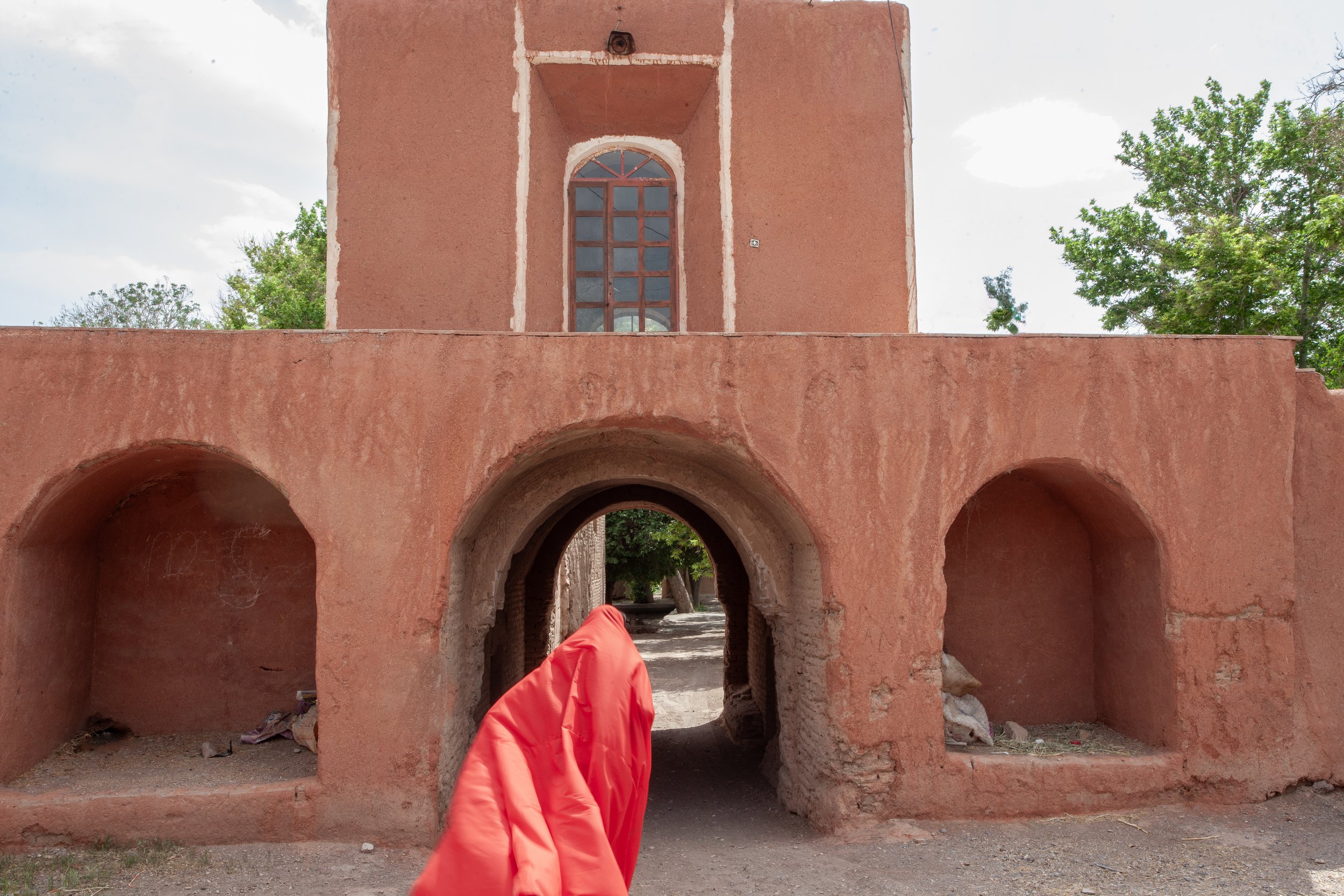
A pinkish adobe building with three arches in the front, and an arched window above the middle arch. There is a person dressed in a red windbreaker walking through the middle arch. Green trees are visible in the background.
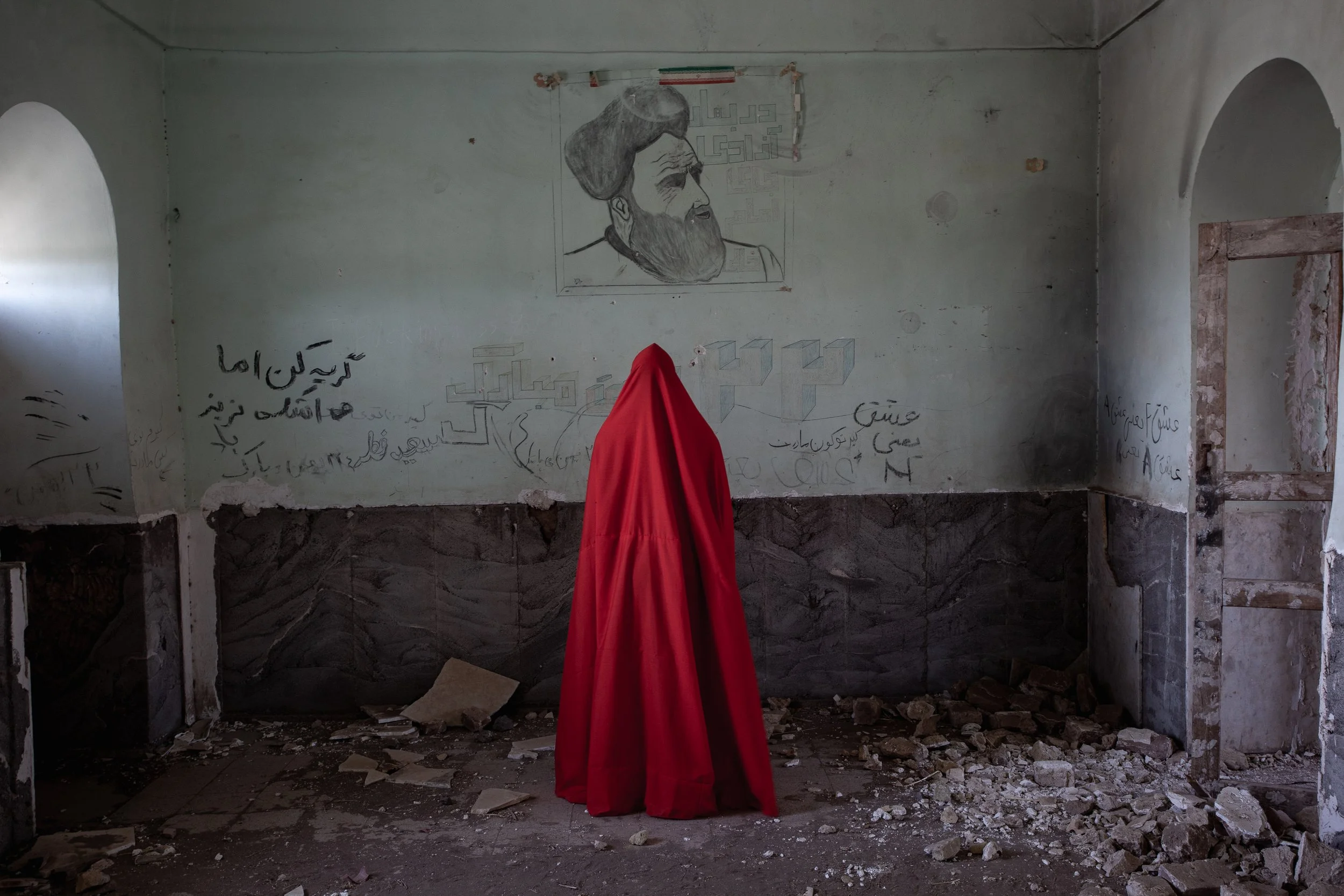
A person draped in a red cloak stands inside an abandoned, dilapidated room with bare concrete floors and walls. The room has graffiti, sketches, and a portrait of a man on the wall.
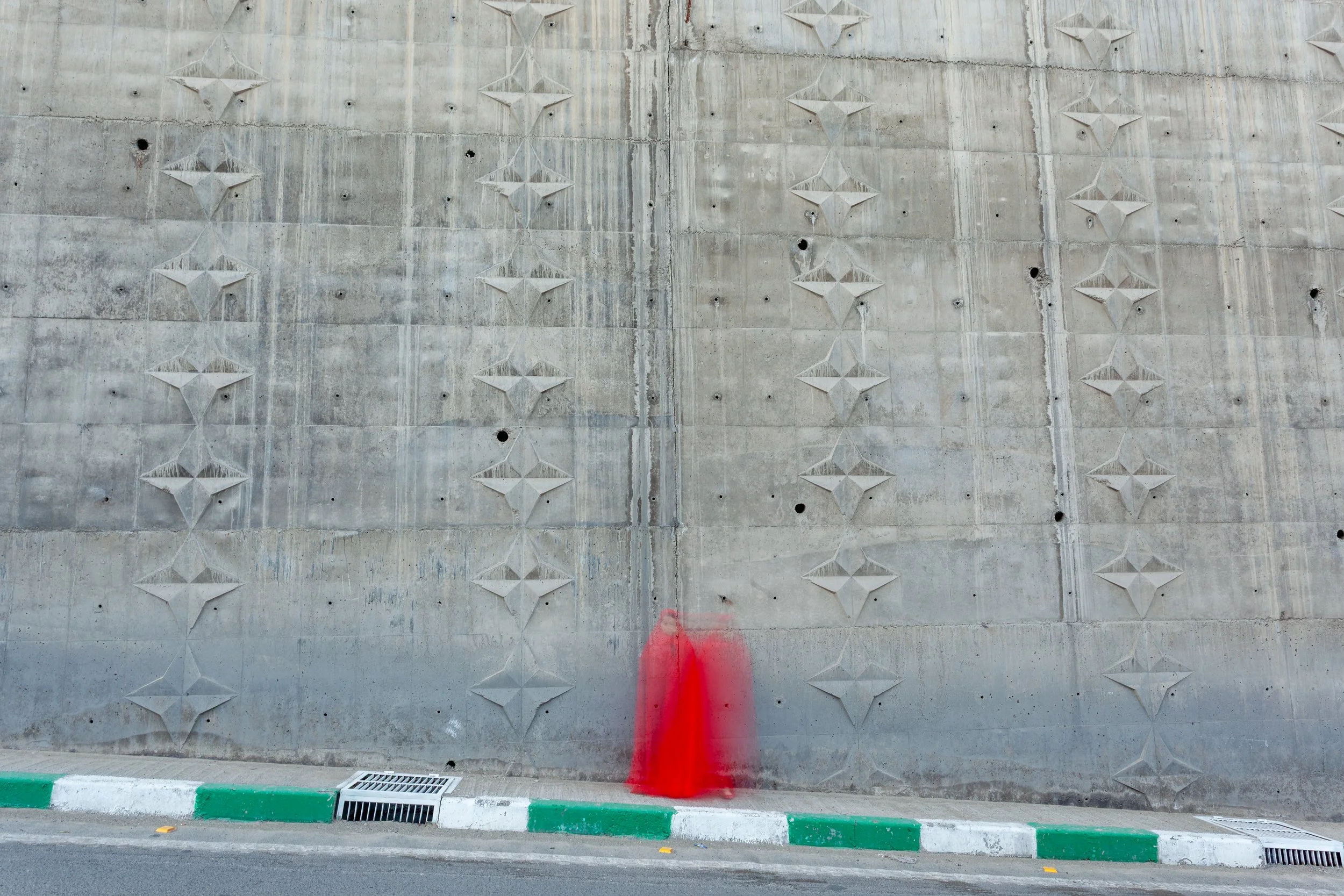
Concrete wall with geometric diamond pattern and small holes, with a red spray-painted mark at the bottom near a curb painted in green and white stripes.
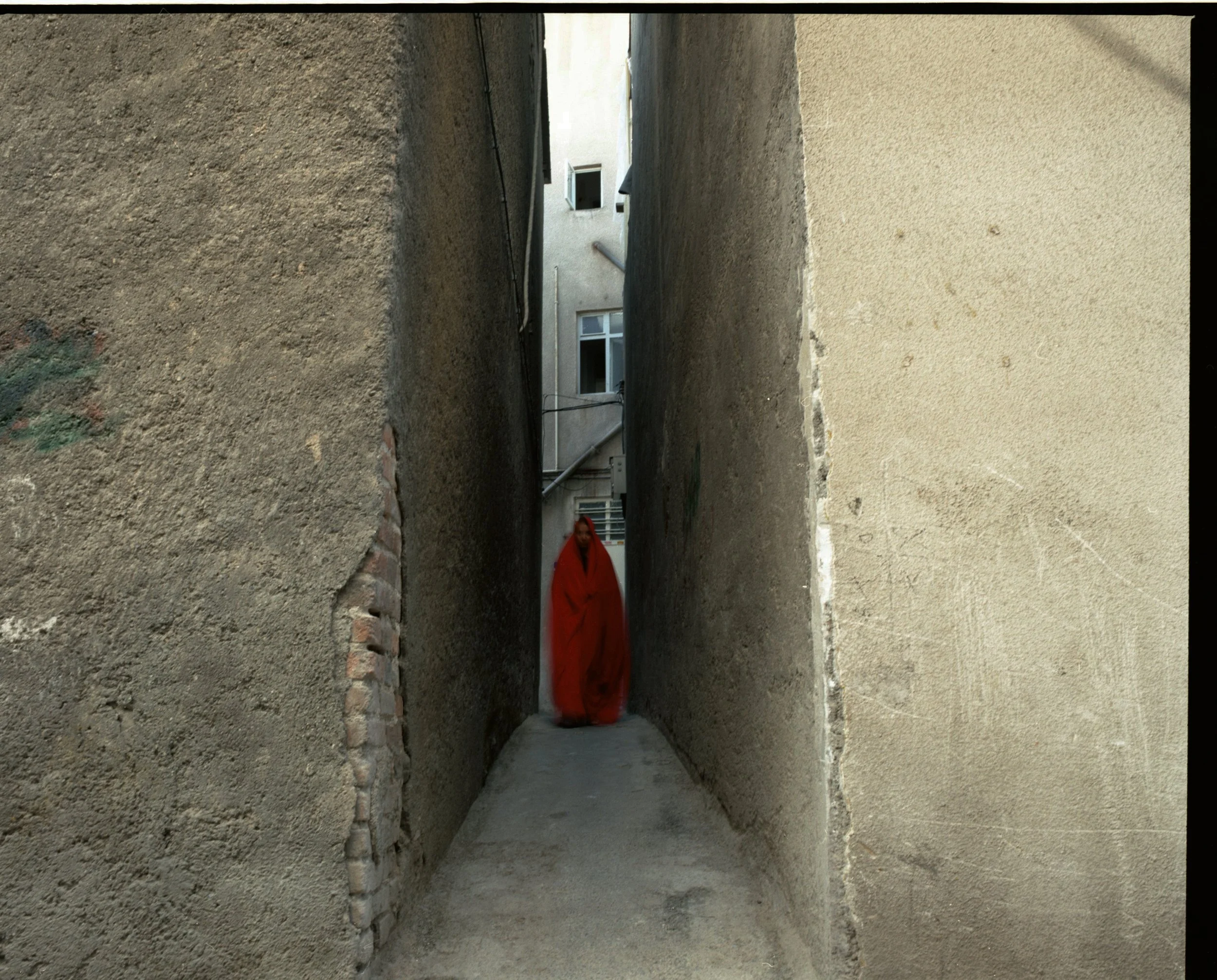
A person in a red cloak walking through a narrow alley between two tall, textured walls in an urban setting.
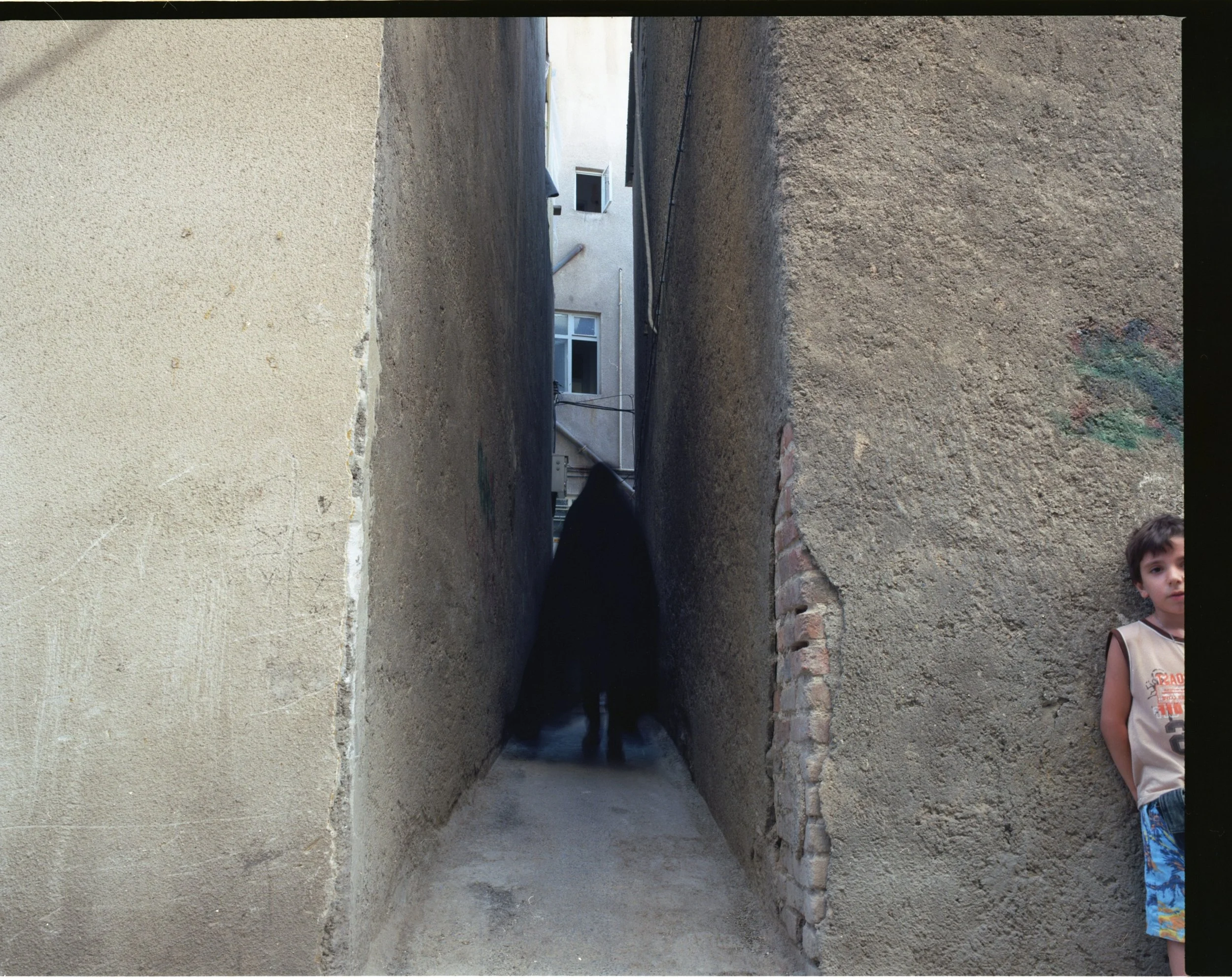
A narrow alleyway between two buildings with textured walls. There is a black dog in the shadows at the end of the alley, and a young boy with brown hair wearing a sleeveless shirt and colorful shorts leaning against the right wall.

In a structure where black is the official color of feminine absence and erasure in the public sphere, the deliberate choice of a red chador serves as an act of reclaiming presence. These images exist on the threshold between 'imposed state' and 'the impulse to be seen'-a space where the garment is transformed from a tool of invisibility into a signal of anomaly and defiance within the landscape.